
Theodore Wirth Home
Theodore Wirth Home and Administration Building was listed on the National Register of Historic Places on June 7, 2002 because of his impact on Minneapolis parks, and how this in turn influenced park planning for municipal, state and national parks across the country.
Theodore Wirth lived in the house from 1910-1945. Succeeding superintendent’s Charles Doell, Robert Ruhe, Charles Spears, David Fisher and Jayne Miller lived in the house. Superintendent Al Bangoura began leasing the building as his residence beginning in January 2019.
Original Architect & Contractor
- Original Architect and Contractor: Lowell A. Lamoreaux
- Architectural Classification: Colonial Revival in form and plan
- Mission Revival in use of stucco and curvilinear gable forms
- Swiss Chalet in brackets
- Interior reflects Arts and Crafts
Historical Registration
- National Register of Historic Places (2002)
- City of Minneapolis Heritage Preservation Commission (1988)

Who We Are
Both share the importance and legacy that The Wirth Home represents as a symbol for the neighborhood, community, and City of Minneapolis, underscored by all the supporting aspects of the greatest park system in America.
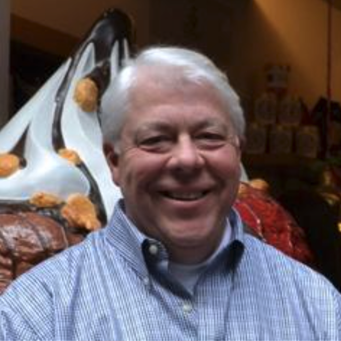
Mark B. Ruhe
Resident of the Wirth Home from 1966 to 1978,
son to Robert W. Ruhe, eighth Superintendent

Dana Wirth Sparks
Great-granddaughter of Leonie & Theodore Wirth
What’s it’s like to live there
To be awarded the opportunity to live in the home is both an honor and a privilege. It’s an iconic structure within the Minneapolis Park System and provides a unique perspective about the importance of our parks to the average citizen that takes the time to enjoy them – you literally observe that interaction every waking moment you’re living there.
It’s also a very fun place to live. The setting of a five-level home atop a hill, with twenty rooms, eight bedrooms, a sliding hill and skating rink in the winter, a baseball diamond or tag-football field in the warmer months and a lake just a short bike ride away makes it a castle for youth – you quickly become popular with the other neighborhood kids.
You also develop a more intimate relationship with our four-legged and winged friends as the cracks and crevasse of the aged structure invite Theodore Wirth’s famous grey squirrels or the proverbial brown bat that decides to perform test flights in your entry hall and living room periodically throughout the summer – “mom, we’ve got another one!”
As with every advantage though come disadvantages. The house and its setting are best described as living in a “goldfish bowl.” Privacy is at a premium and there are moments when security can be a concern. It’s not uncommon to see someone’s face pressed up against a window to “take-a-peak” and see “what’s goes on in there.” The doorbell is rung rather frequently by yet another child with a bloody nose from an accident in the park or an actual call of distress that warrants police attention.
Beyond the obvious though is financial. While considered a perk by some, living in the home takes the superintendent out of the real estate market for an extended period where appreciation works against them and must be made-up when the end of their tenure compels them to re-enter the market – then at a severe disadvantage. All the while, having the requirement of paying rent to live there. It’s not a financial windfall by any stretch of the imagination.
But the advantages greatly outweigh the disadvantages if you remain curious and develop an understanding of people and how we socialize and interact in our recreational activities. The truth is, every day the superintendent lives there, they observe their “clients and customers” firsthand, and it grounds them in what their job is all about in the greatest park system in America.
Our family wouldn’t have traded it for anything.
Mark Ruhe
Son to Robert W. Ruhe, Eighth Superintendent of the Minneapolis Park & Recreation Board (1966 – 1978)
The Significance of the Home
The Wirth Home holds significant historical and cultural value as a symbol of the neighborhood, community, and the City of Minneapolis itself. Its legacy is deeply intertwined with the broader context of the city’s renowned park system, which is often hailed as one of the best in the nation. The home stands as a tangible representation of the city’s commitment to preserving its heritage, fostering community identity, and celebrating the natural beauty and green spaces that make Minneapolis unique.
By connecting to the city’s park system, The Wirth Home also underscores the importance of public spaces in shaping the quality of life for residents. The surrounding parks, trails, and recreational areas enhance the sense of place and community, offering both a physical and emotional connection to the history and values of the area. Together, these elements create a legacy that reflects the shared commitment to environmental stewardship, historical preservation, and community well-being that defines Minneapolis.
Fundraising and Financial Strategy
Given the complexity and cost involved in restoring a historic structure, comprehensive fundraising efforts will be crucial. SOTP is fully aware of the challenges these needs present and believes that raising funds through a blend of individual and institutional donations will help cover the expenses. The primary fundraising focus will be on securing contributions for:
- Capital investments,
- Building materials, and
- Systems or components needed for the home’s restoration.
Given the home’s designation on the National Register of Historic Places (since 2002) and its local historic preservation status by the City of Minneapolis Heritage Preservation Commission, any renovation work must follow strict guidelines. These regulations add to the project’s complexity and cost, but they also ensure that the home’s architectural and historical integrity is preserved for future generations.
While the Minneapolis Park and Recreation Board (MPRB) acknowledges the historical value of the Wirth Home, its future as a residential structure presents difficulties in justifying public funding for its renovation. Public funds are often more difficult to allocate for private residences, even those with historical significance, which creates an additional challenge for sustaining the home. As a result, public-private partnerships, along with targeted fundraising campaigns, will be key in addressing these financial constraints.
The renovation of the Theodore Wirth Home is a critical effort to preserve an important piece of Minneapolis’ history while making it functional for modern residential use. Through careful restoration and thoughtful modernization, the house can continue to serve as a legacy of the city’s rich cultural and architectural heritage. With the right combination of fundraising, strategic planning, and community support, the home can enter its next phase as both a historically significant and contemporary residential space for future generations.
Click to see the MPRB Resolution Authorizing Fundraising (A Fundraising Agreement authorizing Mark Ruhe for certification of the effort)
Current Use and Legacy
As it has for eight of the twelve Superintendents since Theodore Wirth, the house currently serves as a home for Superintendent Al Bangoura and his family, maintaining its legacy as the residence for park leadership. The house is also a nationally recognized historic site, included on the National Register of Historic Places since 2002, and locally designated by the City of Minneapolis Heritage Preservation Commission. These designations ensure that the building’s architectural integrity and historical significance are preserved for future generations.
In addition to its role as a residence, the Wirth House serves as a symbol of the enduring influence of Theodore Wirth on Minneapolis and the broader field of urban park development. The house and the surrounding Lyndale Farmstead Park continue to be a vital part of the Minneapolis park system, representing both the history and ongoing growth of one of the nation’s most acclaimed park systems.
Through its preservation and continued use, the Theodore Wirth House stands as a testament to Wirth’s vision and dedication to creating and maintaining green spaces that benefit the public—a legacy that still shapes the city today.
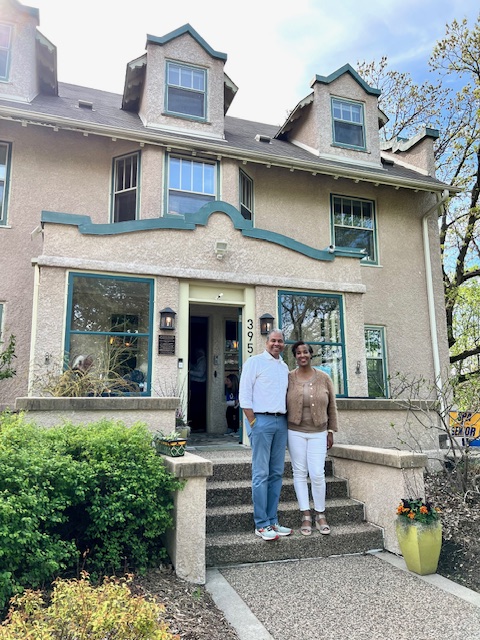
Superintendent Al Bangoura and his wife Kendra Lewis.
Reflections
While serving as MPRB Superintendent, I was honored to live in the Wirth Home (aka the Superintendent’s House). Every time I entered the home, I was reminded of the history of the Minneapolis park system and the importance of my role as Superintendent. I hung pictures of individuals who played key roles in establishing and developing the park system and pictures that depicted elements of the system, past and present, to reflect that history and remind me of the opportunities I had to build on that history.
I was also able to watch and interact with people enjoying Lyndale Farmstead – skaters, sledders, dog walkers, festival goers.I also hosted many events for the Park Board Commissioners, City Council, School Board, County Commissioners, and Park Board Staff to give others the opportunity to enjoy the home.
This home is a critical piece of Minneapolis and the Park System and investing in it is important to remind us of the importance of the park system, serve as a resting place for Superintendents, and honor the legacy of the park system. All of us who have served, serve, and will serve the Minneapolis Park System stand on the shoulders of giants with the responsibility to build on the system’s legacy, and the Wirth Home is a critical piece of that legacy.
 Jayne Milker, Superintendent Emeritus
To be awarded the opportunity to live in the home is both an honor and a privilege. It’s an iconic structure within the Minneapolis Park System and provides a unique perspective about the importance of our parks to the average citizen that takes the time to enjoy them – you literally observe that interaction every waking moment you’re living there.
It’s also a very fun place to live. The setting of a five-level home atop a hill, with twenty rooms, eight bedrooms, a sliding hill and skating rink in the winter, a baseball diamond or tag-football field in the warmer months and a lake just a short bike ride away makes it a castle for youth – you quickly become popular with the other neighborhood kids.
You also develop a more intimate relationship with our four-legged and winged friends as the cracks and crevasse of the aged structure invite Theodore Wirth’s famous grey squirrels or the proverbial brown bat that decides to perform test flights in your entry hall and living room periodically throughout the summer – “mom, we’ve got another one!”
As with every advantage though come disadvantages. The house and its setting are best described as living in a “goldfish bowl.” Privacy is at a premium and there are moments when security can be a concern. It’s not uncommon to see someone’s face pressed up against a window to “take-a-peak” and see “what’s goes on in there.” The doorbell is rung rather frequently by yet another child with a bloody nose from an accident in the park or an actual call of distress that warrants police attention.
Beyond the obvious though is financial. While considered a perk by some, living in the home takes the superintendent out of the real estate market for an extended period where appreciation works against them and must be made-up when the end of their tenure compels them to re-enter the market – then at a severe disadvantage. All the while, having the requirement of paying rent to live there. It’s not a financial windfall by any stretch of the imagination.
But the advantages greatly outweigh the disadvantages if you remain curious and develop an understanding of people and how we socialize and interact in our recreational activities. The truth is, every day the superintendent lives there, they observe their “clients and customers” firsthand, and it grounds them in what their job is all about in the greatest park system in America.
Our family wouldn’t have traded it for anything.
Mark Ruhe, Son to Robert W. Ruhe, Eighth Superintendent of the Minneapolis Park & Recreation Board (1966 – 1978)My grandfather, Conrad, was the second son of Leonie and Theodore Wirth and he enjoyed sharing stories with me about his boyhood in Minneapolis. His father was often working in the basement office, while he and his brothers, Theodore and Walter, played outside with the family’s
St. Bernard, Bella, building tents and forts, and sledding on the hill beside the house. But sleeping on the outside porch with his brothers was always one of the first memories that bore repeating when he talked about the house on Bryant Ave. They slept out there on hot, sticky summer nights, as well as frosty, snowy winter nights. Gramps said, especially on the cold nights, it was a competition to see which brother could stay out there the longest!
I strongly believe both my great-grandparents, Leonie and Theodore, as well as their boys, would be thrilled to see how the parks are enjoyed and appreciated today. They would also be grateful this home is included as such a special landmark in the history of the Minneapolis Park System.
Dana Wirth Sparks, Great-granddaughter of Leonie & Theodore Wirth